Another Rust Tool: OpenCode Browse 0.1.0 Is Out
Swapping Node.js and Playwright for a native Rust binary drops idle relay memory 25x.
Seventeen pure-Rust creative apps, a 275-page documentation wiki, and landing pages for unreleased AI video models turned a solo-led open-source push into one of 2026's largest developer traffic funnels.
Between September 30 and November 18, 2026, the GitHub organization storytold—led by Storyteller.ai founder Brandon Thomas—accumulated nearly 300,000 GitHub stars across a suite of 17 pure-Rust desktop applications and an AI reverse-engineering tool called Craft Anything.
Behind the GitHub spike sits getartcraft.com, a tightly structured Next.js marketing funnel paired with a 275-page documentation site at craft.wiki. Together, they convert open-source curiosity and AI video model hype into registered accounts and recurring cloud compute subscriptions.
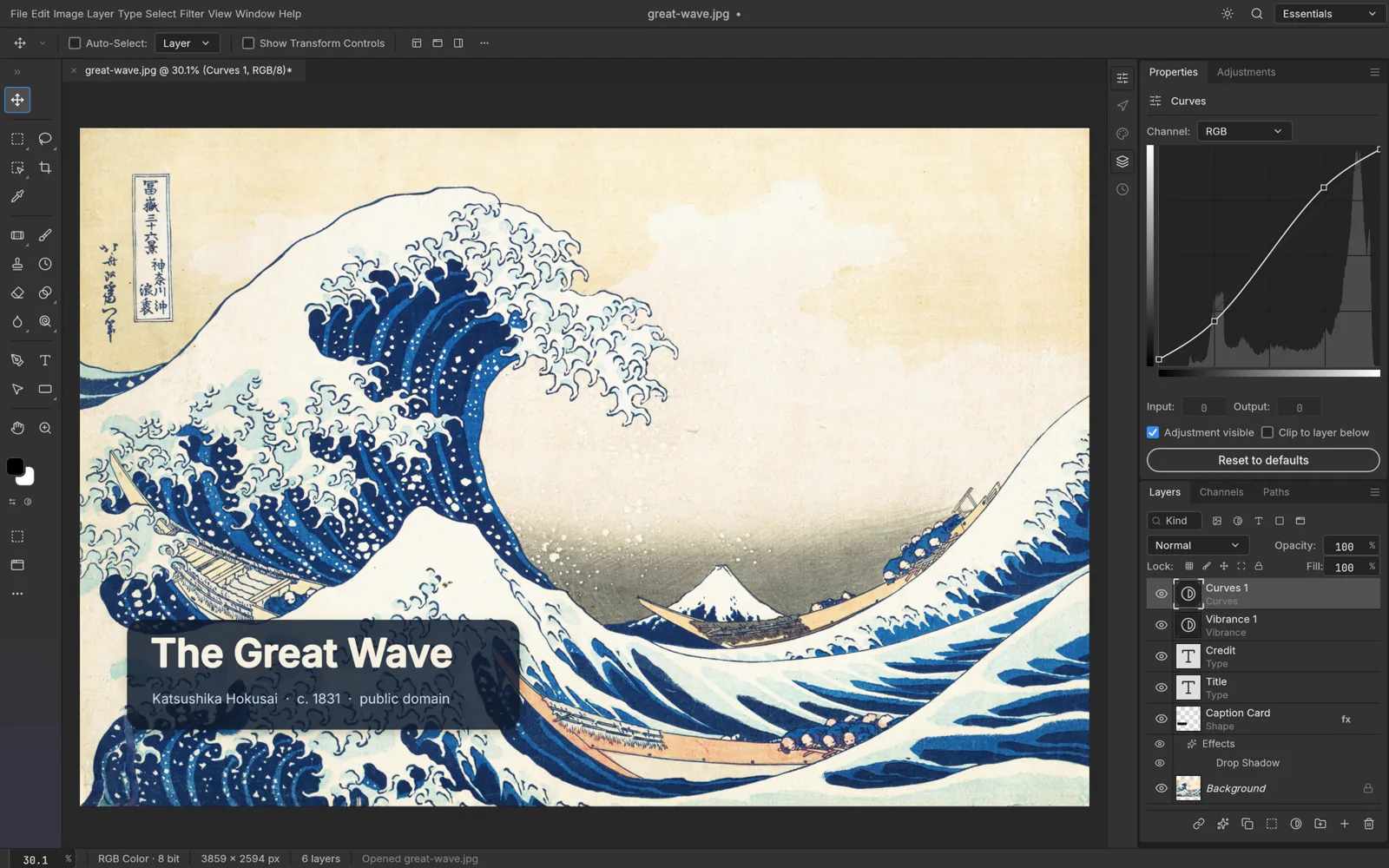
ArtCraft's growth comes from pairing viral open-source distribution with aggressive search intent capture. The main site stays lean at 46 indexed URLs focused on conversion, while craft.wiki captures 275 long-tail tutorial queries and pre-release model pages intercept high-velocity AI video traffic.
Public GitHub repository data from api.github.com/orgs/storytold/repos shows how concentrated the launch window was. Aside from the core artcraft repository (created in March 2022), almost every flagship project was created between September 30 and October 31, 2026:
| Repository | Category | Created | GitHub Stars |
|---|---|---|---|
photocraft | Raster image editor (PSD/PSB) | 2026-09-30 | 80,171 |
artcraft | AI image & video studio | 2022-03-31 | 41,437 |
craft-anything | Software inspection & rebuild engine | 2026-10-31 | 36,138 |
pdfcraft | PDF editor & viewer | 2026-09-30 | 21,050 |
filmcraft | Nonlinear video editor | 2026-09-30 | 18,514 |
wordcraft | Word processor | 2026-10-07 | 18,214 |
lightcraft | Non-destructive photo workflow | 2026-09-30 | 16,131 |
vectorcraft | Vector illustration tool | 2026-09-30 | 11,859 |
Smaller siblings—including effectcraft (8,932 stars), cadcraft (8,228 stars), gridcraft (7,632 stars), craft-launcher (5,461 stars), designcraft (5,316 stars), figcraft (5,114 stars), deckcraft (4,853 stars), and soundcraft (4,436 stars)—push the organization total close to 300,000 stars in under two months.
Inspecting getartcraft.com/sitemap.xml and craft.wiki/sitemap-0.xml reveals a deliberate split between conversion pages and informational long-tail pages.
Rather than relying on traditional blog posts (the /news section has only two entries), getartcraft.com dedicates top-level URLs to trending AI video models:
/minimax-h3: Targets searches like "MiniMax H3 free" by embedding an interactive prompt box directly on the landing page. Generating a clip requires a free ArtCraft account, turning organic search traffic into user signups on the spot./seedance-2 and /seedance2-5: Even before ByteDance published official specs for Seedance 2.5, ArtCraft shipped /seedance2-5 with a section explicitly labeled Rumor vs. fact, flagged. It ranks early for an unreleased model keyword while funneling visitors into Seedance 2.0 inside ArtCraft today./faq/models-supported: A single Article-schema page indexing dozens of high-volume model names—Grok, Midjourney, Flux Pro 1.1 Ultra, Nano Banana Pro, GPT Image 1.5, Seedream 4.5, Kling 2.6 Pro, Seedance 2.0, Sora 2 Pro, and Google Veo 3.1.Keeping the main domain focused at 46 URLs concentrates link equity on product and pricing pages (/studio, /pricing, /download, /linux, and 17 /apps/* pages). Every app landing page renders server-side HTML with a SoftwareApplication JSON-LD block specifying price: "0" and operatingSystem: "macOS, Windows, Linux, Web" (referencing WebAssembly browser builds).
Meanwhile, 275 long-tail documentation and how-to pages live on craft.wiki. Each app gets dedicated pages for installation, file formats, troubleshooting, and beginner workflows (such as keyframe animation or vector fundamentals), with persistent top-bar links back to getartcraft.com.
Pages like /creators/jboogxcreative package work from high-reach VFX and AI creators (Tyler Bernabe, who has nearly a million followers) alongside embedded Instagram Reels and brand credits. When viewers search for the software behind a viral reel, the creator page bridges social discovery directly to a download or web-app launch.
Every sampled route on getartcraft.com returns HTTP 200 SSR HTML with explicit <link rel="canonical"> tags and layered JSON-LD schemas: SoftwareApplication on product pages, FAQPage on model landing pages, and Article on FAQ guides.
SEO captures demand, but four broader industry catalysts created the search volume in the first place.
Creative professionals and Linux users have spent years pushing back against Adobe Creative Cloud and Microsoft 365 subscription lock-in. ArtCraft leans directly into that sentiment with "No subscription required" and "Open source, offline, and yours," while deliberately mirroring familiar keyboard shortcuts and panel layouts so users do not face a steep retraining curve.
Media outlets including Creative Bloq, Tom's Hardware, and Gigazine—alongside massive Hacker News and Reddit threads—picked up the story because of how the codebase was produced. Hundreds of early commits carried Co-Authored-By: Claude trailers, demonstrating an unprecedented pace of pure-Rust (wgpu on Metal, Vulkan, DirectX 12, and WebGPU) application generation assisted by Claude Opus 5.5.
Then came craft-anything on October 31, pitching a "clean-room" pipeline that inspects external UI screenshots and behavior before handing specs to a coding agent to rebuild the software from scratch. That premise triggered heated debates over trade dress, software patents, and whether AI coding agents are eroding traditional software moats—fueling even more shares and stars.
Unlike legacy open-source alternatives such as GIMP or LibreOffice, ArtCraft's 17 apps ship with unified command registries, JSON control channels, and MCP (Model Context Protocol) servers. Coding agents like Claude Code can drive the apps programmatically or inspect headless renders, aligning the suite with the 2026 shift toward agent-operated desktop tools.
Giving away 17 native Rust apps solves distribution; ArtCraft Studio handles revenue. While local editing is free, generating video and images with third-party frontier models consumes cloud credits. On /pricing, the entry Basic tier ($8/month with the 20% discount, $96 billed yearly) includes 1,000 monthly credits—roughly 250 Nano Banana images, 63 seconds of Seedance 2.0 video, or 45 seconds of Kling 3.0 Pro video. It sidesteps subscription resentment by charging for GPU inference rather than software access.
Community hands-on reports on Hacker News and Reddit provide an important reality check. Most of the 17 Crafting Apps—including PhotoCraft—are explicitly labeled Early Alpha. Users testing complex PSD files and heavy layer stacks report UI lag, broken panel edge cases, and missing deep-workflow parity compared to mature Adobe tools.
The legal status of AI-assisted clean-room clones that closely mirror commercial UI layouts also remains untested. Still, as a case study in modern developer marketing, getartcraft.com is hard to ignore: pair an emotional open-source narrative with agent-native architecture, intercept trending model searches with interactive try-now pages, and keep the monetization loop focused on cloud inference.
ArtCraft's Rust suite ships MCP servers and JSON channels for coding agents. Connect CodingPass to Claude Code or OpenCode, metered at official API prices, cancel anytime.