All models
Every model's ID, minimum plan and monthly allowance on Go, Plus and Pro.
Alibaba's proprietary flagship Qwen4-Max activates 71B of its 2.4T parameters per token, takes first place on 4 of 16 official benchmarks, and cuts cache read pricing to $0.075 per million tokens (CNY 0.5 in mainland China). Here are the official and third-party numbers, regional API pricing, two real multi-turn task bills, and how to pick a reasoning effort level.
On November 16, Alibaba released its new flagship model, Qwen4-Max. Built on the new Qwen4 sparse Mixture-of-Experts (MoE) architecture, it has 2.4T backbone parameters, 71B activated per token, and an additional 328B N-gram Embedding parameters. It supports a 1M token context window and native visual input, and ships exclusively as a proprietary, API-only model and through official Qwen apps.
A week before launch, an early test build appeared anonymously in the coding IDE Qoder before being revealed as Qwen4-Max-Preview. On November 16, Alibaba published the full benchmark suite, architectural breakdown, and API pricing. Below are the official numbers, independent leaderboard standings, pricing tables, and real-world community task bills.
Bottom line: Qwen4-Max shines on long-horizon agent tasks, repository-level code repair (75.7 on DeepSWE), and cheap cache reads ($0.075 per million tokens internationally, CNY 0.5 in mainland China, cutting average cost per task on Work360 by 62% over the last generation). It falls short on terminal command execution (48.5 on Terminal-Bench 4.0), black-box software replication (31.5 on ProgramBench), and latency at high reasoning effort (32.1 minutes per task on Artificial Analysis). Use it for long-context, multi-turn engineering and document workflows; leave reasoning effort at the default high for everyday calls and switch to xhigh for complex full-stack or terminal coding.
Qwen4-Max makes three architectural changes to its sparse MoE design to lower long-sequence inference overhead and reduce active parameters per step:
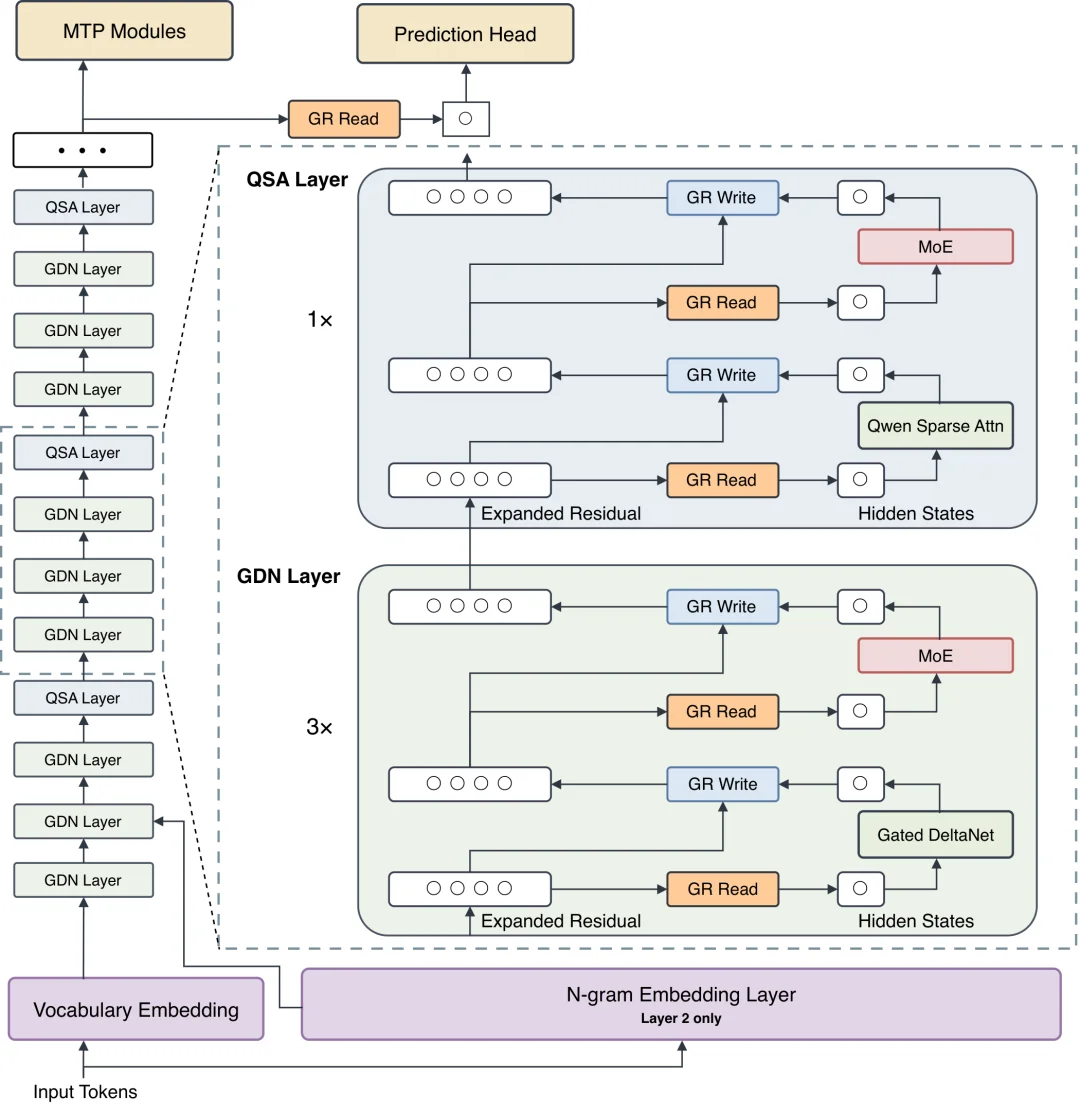
With this design, Qwen4-Max activates 71B parameters per token — roughly 25% fewer than its predecessor Qwen3.8-Max (95B) — and completed its 2.4T pre-training run with no loss spikes throughout the run. Across Qwen's internal base evaluations covering Knowledge, Code, QA, and STEM, Qwen4-Max-Base achieved the lowest bits per byte (BPB, lower is better) among all five evaluated checkpoints, improving by roughly 5%–13% over Qwen3.8-Max-Base. An official footnote notes that two models in that base comparison, GLM-5.3 and Kimi-K3.1-Pro, are post-trained checkpoints, which may affect direct comparisons with base models.
The rollout played out over ten days: on November 6, the official Qwen X account posted a teaser reading “The becoming begins.” On November 7, the coding IDE Qoder quietly launched an anonymous model named Qoduck, free for individual users for a limited time and updated daily across four anonymous days. On November 11, Qoder revealed the model and upgraded it to Qwen4-Max-Preview in a post that passed 5.4 million views (“Qoduck has earned its name. Today it upgrades to Qwen4-Max-Preview. For 4 anonymous days it was a Qwen test build for Qoder users, updated daily.”). The general release followed on November 16.
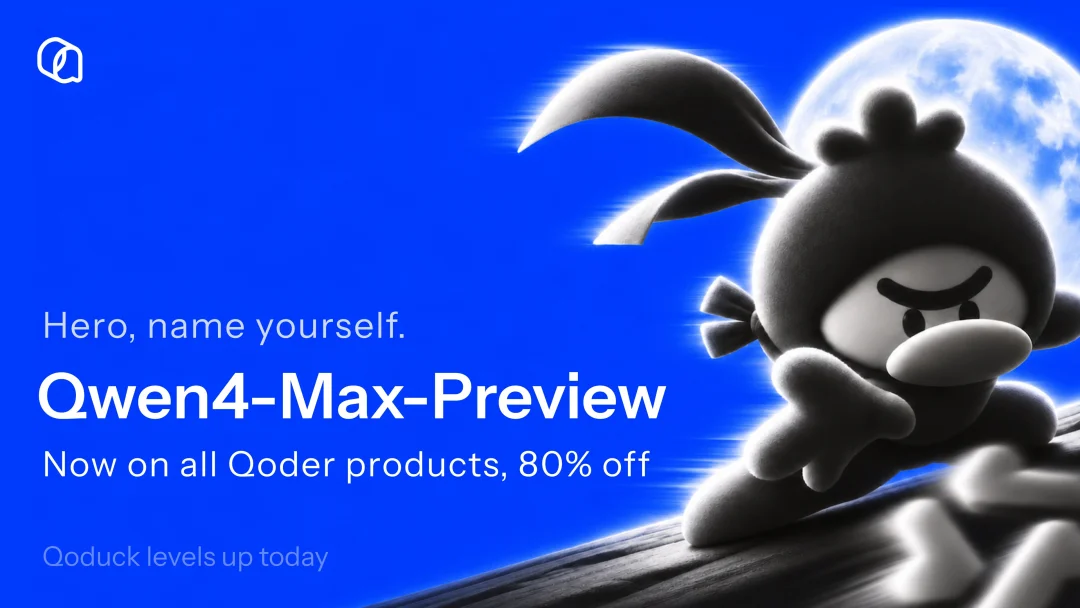
qwen4-max is now live for pay-as-you-go API calls on Alibaba Cloud Model Studio (mainland China) and QwenCloud (international), as well as through the subscription-based Token Plan in the Singapore region. On the application side, it is available in QwenWork, Qoder, the Qwen app, and Qwen Studio.
Qwen4-Max itself does not release open weights. The launch blog states only at the end that smaller and medium-sized models in the Qwen4 series will be open-sourced later, without naming parameter sizes or release dates. Replies under the reveal post quickly filled up with developers spamming “Qwen-4 27B > GTA VI” to push for the smaller open checkpoints.
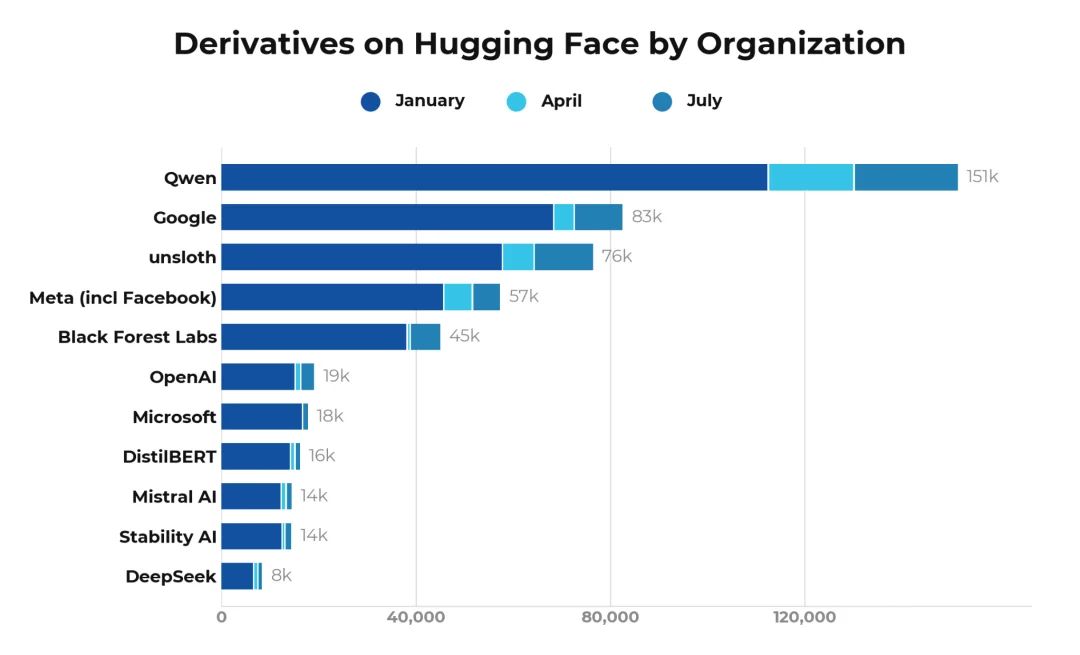
The fixation on smaller checkpoints comes down to how widely Qwen's open-weight models run in local and self-hosted setups. According to Hugging Face's State of Open Models: Summer 2026 Observations, Qwen models logged 2.045 billion downloads on Hugging Face between January and August 2026 (Alibaba puts cumulative downloads across all platforms at over 3 billion). The ecosystem has produced 151,448 Qwen derivative models — 2.6 times Meta's count, and more than Google (82,506) and Meta combined.
Production teams use them too. In an October 2025 interview, Airbnb CEO Brian Chesky said Airbnb's AI customer service relies heavily on Qwen: “We're relying a lot on Alibaba's Qwen model. It's very good. It's also fast and cheap.”
A proprietary flagship doesn't automatically beat smaller open-weight models on every job, either. Testing Qwen4-Max on their team's short-horizon data analysis benchmark, Hacker News user chriddyp reported that “it scored a few points worse than Qwen 3.8 27B from August (which is open weights) and cost a bit more.”
Alibaba published 16 benchmarks spanning coding, office workflows, scientific research, and multimodal understanding, comparing Qwen4-Max against Qwen3.8-Max-0902, Claude Opus 5.5, GPT-6.1 Sol, GPT-6 Astra, and Kimi K3.1.
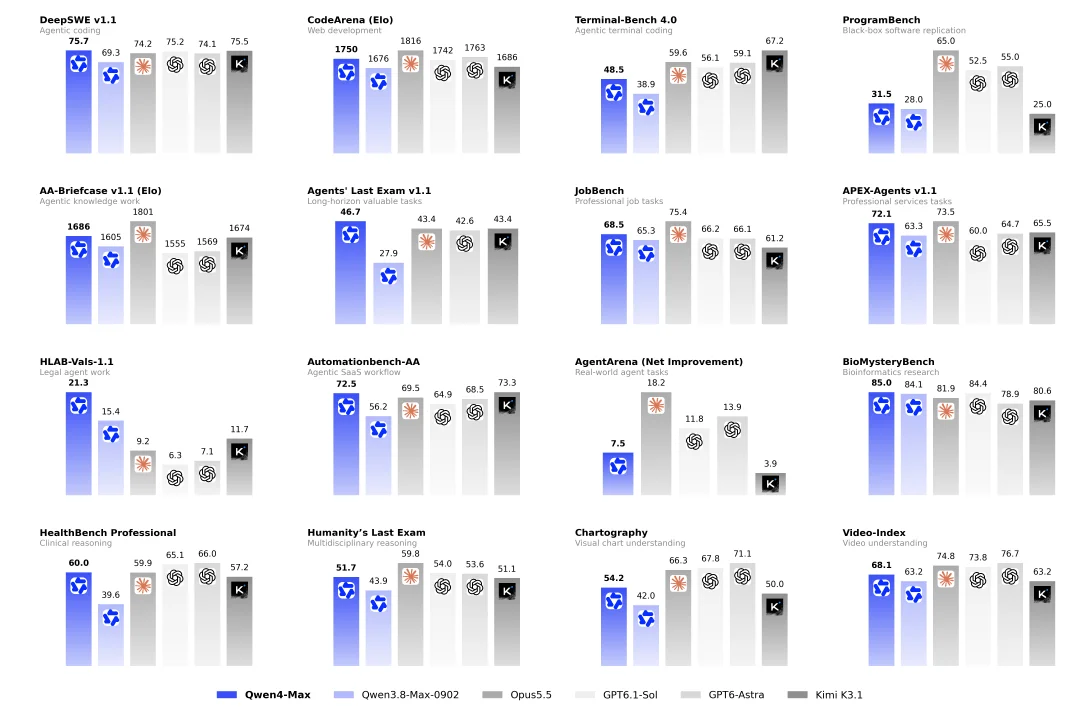
Here are the full numbers from all 16 benchmarks in the chart (bold marks the highest score in each row):
| Benchmark | Qwen4-Max | Qwen3.8-Max | Opus 5.5 | GPT-6.1 Sol | GPT-6 Astra | Kimi K3.1 |
|---|---|---|---|---|---|---|
| DeepSWE v1.1 | 75.7 | 69.3 | 74.2 | 75.2 | 74.1 | 75.5 |
| CodeArena (Elo) | 1750 | 1676 | 1816 | 1742 | 1763 | 1686 |
| Terminal-Bench 4.0 | 48.5 | 38.9 | 59.6 | 56.1 | 59.1 | 67.2 |
| ProgramBench | 31.5 | 28.0 | 65.0 | 52.5 | 55.0 | 25.0 |
| AA-Briefcase v1.1 (Elo) | 1686 | 1605 | 1801 | 1555 | 1569 | 1674 |
| Agents’ Last Exam v1.1 | 46.7 | 27.9 | 43.4 | 42.6 (GPT, single entry in chart) | — | 43.4 |
| JobBench | 68.5 | 65.3 | 75.4 | 66.2 | 66.1 | 61.2 |
| APEX-Agents v1.1 | 72.1 | 63.3 | 73.5 | 60.0 | 64.7 | 65.5 |
| HLAB-Vals-1.1 | 21.3 | 15.4 | 9.2 | 6.3 | 7.1 | 11.7 |
| AutomationBench-AA | 72.5 | 56.2 | 69.5 | 64.9 | 68.5 | 73.3 |
| AgentArena (Net Improvement) | 7.5 | — | 18.2 | 11.8 | 13.9 | 3.9 |
| BioMysteryBench | 85.0 | 84.1 | 81.9 | 84.4 | 78.9 | 80.6 |
| HealthBench Professional | 60.0 | 39.6 | 59.9 | 65.1 | 66.0 | 57.2 |
| Humanity’s Last Exam | 51.7 | 43.9 | 59.8 | 54.0 | 53.6 | 51.1 |
| Chartography | 54.2 | 42.0 | 66.3 | 67.8 | 71.1 | 50.0 |
| Video-Index | 68.1 | 63.2 | 74.8 | 73.8 | 76.7 | 63.2 |
Rather than cherry-picking only winning boards, the Qwen team plotted its leads and its deficits in the same graphic:
On the blind frontend leaderboard CodeArena: WebDev (data from 2026-11-14 across 159 models and over 1 million votes), Qwen4-Max (xHigh) sits 6th globally at 1,750 Elo — the highest-ranked Chinese model on the board, ahead of 13th-place Kimi K3.1 Pro (1,686). It trails GPT-6 Astra (1,763) while leading Claude Fable 5.1 (1,743), GPT-6.1 Sol (1,742), and Claude Sonnet 5.5 at High effort (10th, 1,716). Two caveats apply: Sonnet 5.5 at xHigh effort takes 3rd place with 1,772, and Qwen4-Max's score is still marked Preliminary on 1,814 votes, with a ±15 confidence interval corresponding to a rank spread of 3–9.
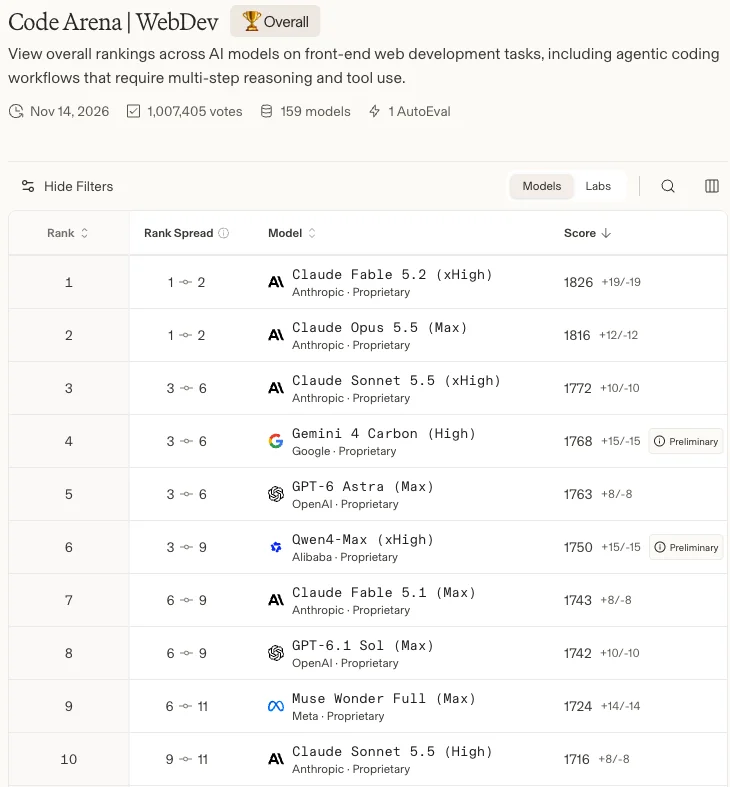
| Rank | Model | Elo score | Notes |
|---|---|---|---|
| 1 | Claude Fable 5.2 (xHigh) | 1826 ±19 | — |
| 2 | Claude Opus 5.5 (Max) | 1816 ±12 | — |
| 3 | Claude Sonnet 5.5 (xHigh) | 1772 ±10 | — |
| 4 | Gemini 4 Carbon (High) | 1768 ±15 | Preliminary |
| 5 | GPT-6 Astra (Max) | 1763 ±8 | — |
| 6 | Qwen4-Max (xHigh) | 1750 ±15 | Preliminary; Rank Spread 3–9; 1,814 votes; Cost/Task (P50) $4.18 |
| 7 | Claude Fable 5.1 (Max) | 1743 ±8 | — |
| 8 | GPT-6.1 Sol (Max) | 1742 ±10 | — |
| 10 | Claude Sonnet 5.5 (High) | 1716 ±8 | — |
| 13 | Kimi K3.1 Pro (Max) | 1686 ±9 | Next highest Chinese model |
| 16 | Qwen3.8-Max (0902) | 1676 ±6 | Previous generation |
| 19 | DeepSeek-V4.1-Flash-20261017 (Max) | 1661 ±7 | Token usage comparison model below |
Independent evaluator Artificial Analysis (captured 2026-11-17) paints a sobering picture across its 9-benchmark Intelligence Index v5.0.1: Qwen4-Max scores 43, placing 38th out of 81 models (the median for comparable models is 41). In the same table, GPT-6.1 Sol (max) scores 55 at an average cost of $1.27 per task — 12 points higher than Qwen4-Max ($3.27) and 61% cheaper per task — while Kimi K3.1 Pro scores 46 at $3.68 per task.
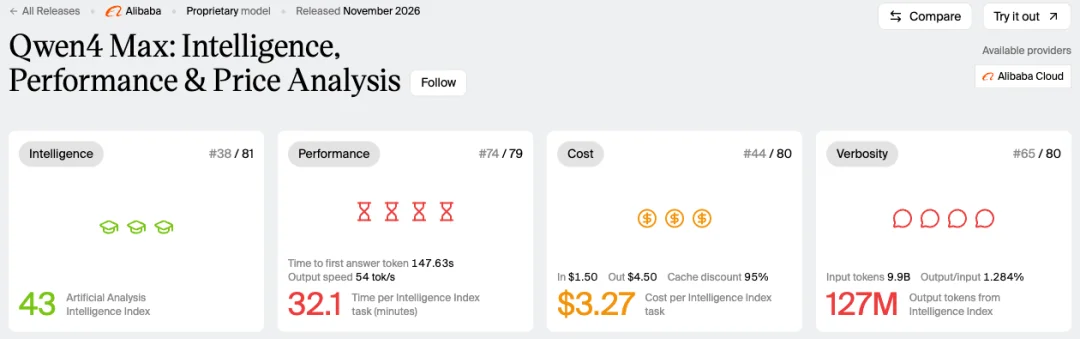
| Model | Intelligence Index | Time per task (min) | Cost per task |
|---|---|---|---|
| Claude Fable 5.2 (max) | 65 | 40.8 | $26.54 |
| Gemini 4 Carbon (high) | 60 | 31.1 | $5.48 |
| Claude Opus 5.5 (max) | 59 | 24.6 | $10.04 |
| GPT-6 Astra (max) | 57 | 20.4 | $6.24 |
| GPT-6.1 Sol (max) | 55 | 23.0 | $1.27 |
| Kimi K3.1 Pro | 46 | 38.8 | $3.68 |
| Qwen4-Max | 43 | 32.1 | $3.27 |
| Grok 4.7 (xhigh) | 35 | 24.6 | $7.77 |
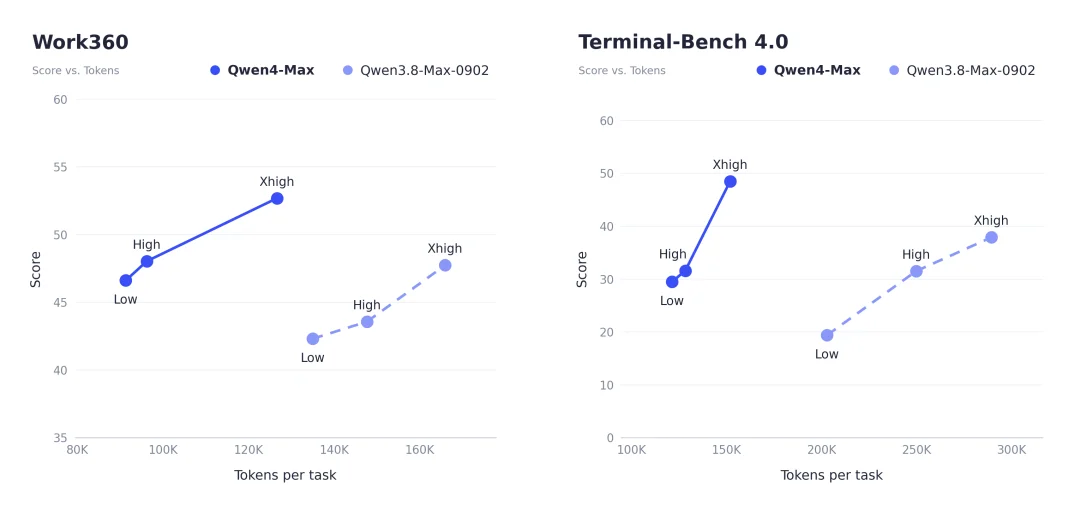
Compared with its predecessor Qwen3.8-Max, Alibaba reports that on Work360, Qwen4-Max's token usage per task drops by approximately 24% at xhigh effort and 35% at high effort. On Terminal-Bench 4.0, average consumption per task at xhigh drops from roughly 289K tokens to 151K (down ~48%) while the score climbs from 38.9 to 48.5; token usage at high effort falls by roughly 49%.
During the preview window, developers also ran two head-to-head token comparisons on identical prompts:
Qwen4-Max-Preview against DeepSeek-v4.1-flash-1017: Qwen used fewer tokens on 87 of the 103 tasks, averaging roughly 77K tokens per task against DeepSeek's 115K — about 33% less.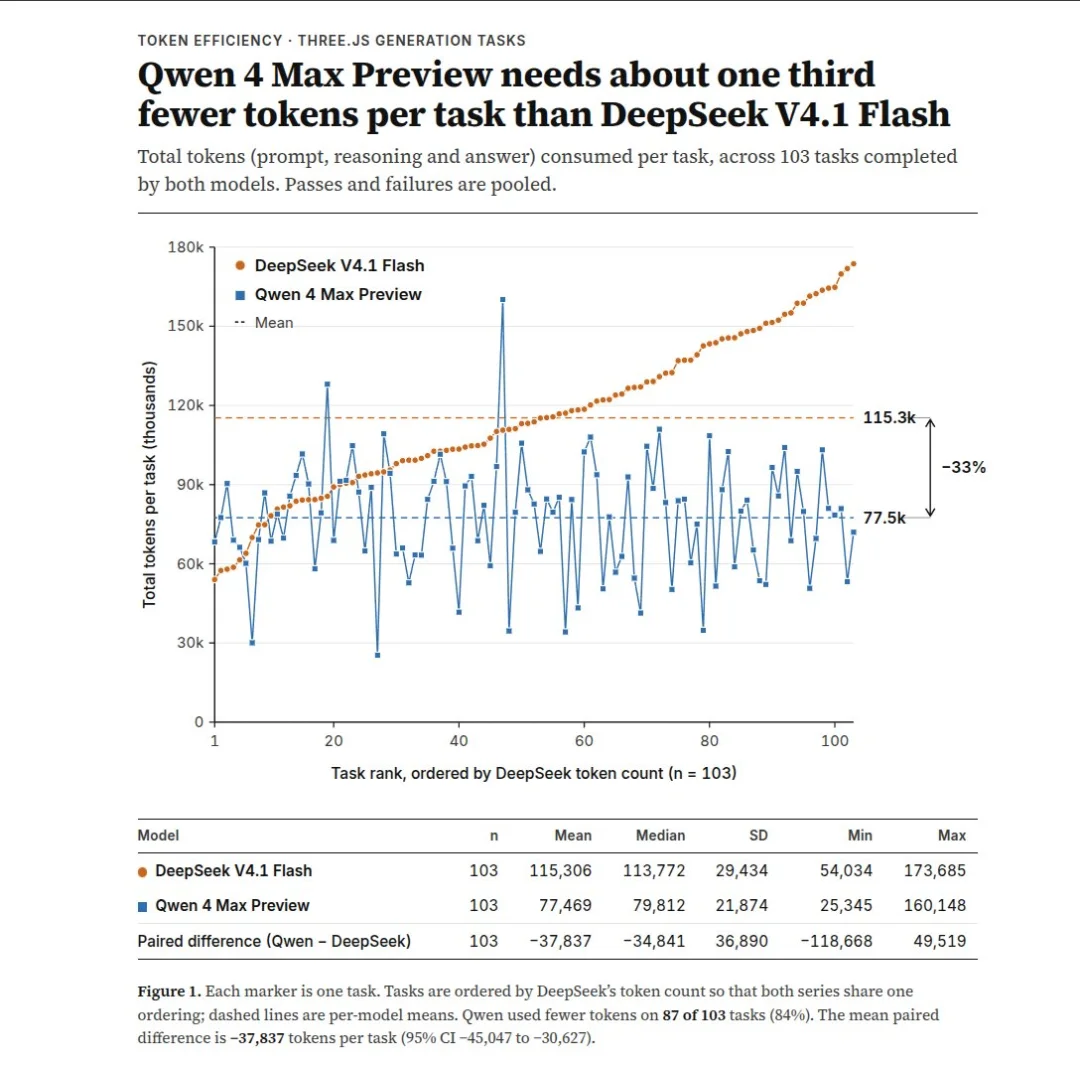
Both community tests ran the preview build against DeepSeek V4.1 Flash. Even though Qwen used a third to half fewer tokens per prompt, DeepSeek V4.1 Flash is priced at $0.15 / $0.60 per million input / output tokens — one-tenth of Qwen4-Max's input rate ($1.50 / $4.50) and roughly one-seventh of its output rate. As @ItsmeAjayKV noted in the thread: “Cost and size is another factor, deepseek-v4.1-flash clearly wins there.”
Across the broader frontier field on Artificial Analysis, Qwen4-Max generated 127M output tokens to finish the full Intelligence Index — well above the comparable-model median of 78.6M, earning a “very verbose” label. It averaged 32.1 minutes per task (median 13.3 minutes), waited 147.63 seconds for the time to first answer token, and streamed at an output speed of 54 tok/s.
| Evaluation | Baseline | Qwen4-Max | Baseline figure | Takeaway |
|---|---|---|---|---|
| Work360 (xHigh / High) | Qwen3.8-Max-0902 | ≈127K / ≈96K | ≈166K / ≈148K | Down ~24% / ~35% vs. previous generation |
| Terminal-Bench 4.0 (xHigh / High) | Qwen3.8-Max-0902 | ≈151K / ≈129K | ≈289K / ≈250K | Down ~48% / ~49% vs. previous generation |
| 103 Three.js tasks (preview) | DeepSeek V4.1 Flash | 77.5K / task | 115.3K / task | 33% fewer tokens, but DeepSeek's unit price is an order of magnitude lower |
| AA Intelligence Index output & time per task | Comparable frontier median | 127M / 32.1 min | 78.6M / 13.3 min | Labeled “very verbose” by AA; task time is 2.4× the median |
We think Qwen4-Max's token reductions only hold up against its own predecessor Qwen3.8-Max and DeepSeek V4.1 Flash; lined up against peer frontier models across the industry, it remains slow and verbose at high reasoning effort.
According to Alibaba Cloud Model Studio documentation, Qwen4-Max's reasoning_effort parameter accepts three levels: low, high, and xhigh (high is the default, with a default maximum chain-of-thought budget of thinking_budget=131072; passing minimal, medium, or max maps to low, high, and xhigh, respectively).
Reading from Alibaba's official efficiency curves, the three effort levels compare on Work360 and Terminal-Bench 4.0 as follows:
| Benchmark | Low | High (GA default) | Xhigh | High vs. Xhigh gap |
|---|---|---|---|---|
| Work360 (office & industry tasks) | ≈46.6 (≈91K) | ≈48.0 (≈96K) | 52.69 (≈127K) | High scores ~4.7 points lower and saves ~24% tokens |
| Terminal-Bench 4.0 (terminal coding) | ≈29.5 (≈122K) | ≈31.5 (≈129K) | 48.5 (≈151K) | High scores ~17.0 points lower and saves only ~15% tokens |
When the preview first rolled out, the default effort was locked to xhigh, dragging out response times on straightforward prompts. Developer @SrinivasValekar shared a village-generation run with both models set to xhigh: Gemini 4 Hydrogen finished in 12 minutes for about $1.7, while Qwen4-Max ran for 1 hour and 15 minutes for about $0.9 — as they put it, “one test is not a leaderboard, but the time gap is large.”
Testing qwen4-max-preview in Claude Code via Token Plan, the YouTube channel The Dark Factory ran the same budgeting app prompt across effort settings: dropping from the default xhigh to “the same Qwen 4 with Claude Code's effort set to low” cut wall-clock time from 24 minutes to 9 minutes, reduced context read tokens from 4.4M to 1.1M (down 75%), cut output tokens from 83K to 31K (down 63%), and raised its blind evaluation score from judge Codex (GPT-6.1 Sol) from 8/10 to 9/10.
| Effort level | Output tokens | Read tokens | Runtime | Blind score (GPT-6.1 Sol judge) |
|---|---|---|---|---|
| Default (xHigh) | 83K | 4.4M | 24 min | 8 / 10 |
| low | 31K (-63%) | 1.1M (-75%) | 9 min | 9 / 10 |
The Dark Factory's numbers come from a single run on one frontend prompt with a single AI judge. Paired with the official curves above, we think the GA default high is plenty for everyday office work, standard frontend code, and Q&A; for complex full-stack work or terminal command-line agent tasks like Terminal-Bench, the 17-point gap between high and xhigh makes switching manually to xhigh necessary.
Here is a minimal example setting the reasoning effort level on QwenCloud's OpenAI-compatible Responses API:
from openai import OpenAIimport os client = OpenAI( api_key=os.getenv("DASHSCOPE_API_KEY"), base_url="https://ap-southeast-1.maas.qwencloudapi.com/compatible-mode/v1",) resp = client.responses.create( model="qwen4-max", input="Write unit tests for this function", reasoning={"effort": "high"}, # low / high / xhigh, defaults to high)print(resp.output_text)Official API pricing is split between mainland China (Alibaba Cloud Model Studio) and international regions (QwenCloud, Singapore). In mainland China, standard input costs CNY 10 per million tokens and output costs CNY 30 per million tokens — roughly 16.7% lower than qwen3.8-max (CNY 12 / CNY 36). Cache hits drop to CNY 0.5 per million tokens (or $0.075 per million on QwenCloud), just 5% of the standard input rate. Combined with lower token usage per task, Alibaba reports that average cost per task on Work360 drops from $4.43 to $1.67 — a 62% reduction.
| Billing item | Mainland China (Model Studio) | International (QwenCloud, Singapore) |
|---|---|---|
| Standard Input (0 < tokens ≤ 1M, thinking & non-thinking) | CNY 10 / 1M | $1.5 / 1M |
| Output (reasoning tokens + answer) | CNY 30 / 1M | $4.5 / 1M |
| Cache hit (Explicit Cache Read / Implicit Cache) | CNY 0.5 / 1M | $0.075 / 1M |
| 5-Minute Explicit Cache Creation | CNY 12.5 / 1M | $1.875 / 1M |
| 1-Hour Explicit Cache Creation | CNY 20 / 1M | $3 / 1M |
| New user free quota | 1M tokens (90 days) | — |
According to Model Studio's billing documentation, caching works as follows: implicit cache is enabled by default with no code changes, but cache hits are not guaranteed on every request. Explicit cache requires a prefix of at least 1,024 tokens with a selectable TTL of 5 minutes (5m, default) or 1 hour (1h) that auto-renews on hits. Cached prefixes are only shared across requests under the same account, and all output tokens (including reasoning tokens) are billed at the full output rate.
Using the real token counts shared by developer @superalesha from building a rainy Tokyo ramen stall in Blender — where they ran the exact same prompt on the preview build at xhigh across two agent harnesses, DeepSeek Harness (DSH) and Qwen Code — here is what the bills look like repriced at GA rates (cost = uncached input × input rate + cache hit × cache rate + output × output rate):
| Agent harness (same prompt, xHigh) | Total input (cache hit / miss) | Output | Mainland China bill (with cache) | Mainland China (assuming 0 cache) | International bill (with cache) | International (assuming 0 cache) |
|---|---|---|---|---|---|---|
| DeepSeek Harness | 11.96M (11.59M / 0.37M) | 130K | 3.70 + 5.80 + 3.90 = CNY 13.40 | CNY 123.50 | $2.01 | $18.53 |
| Qwen Code | 3.02M (2.85M / 0.17M) | 62K | 1.70 + 1.43 + 1.86 = CNY 4.99 | CNY 32.06 | $0.75 | $4.81 |
Three things stand out from this bill breakdown:
Highlighting the 1M context window, native vision, and tool use, Alibaba's launch blog and community testers showed several long-horizon workflows.
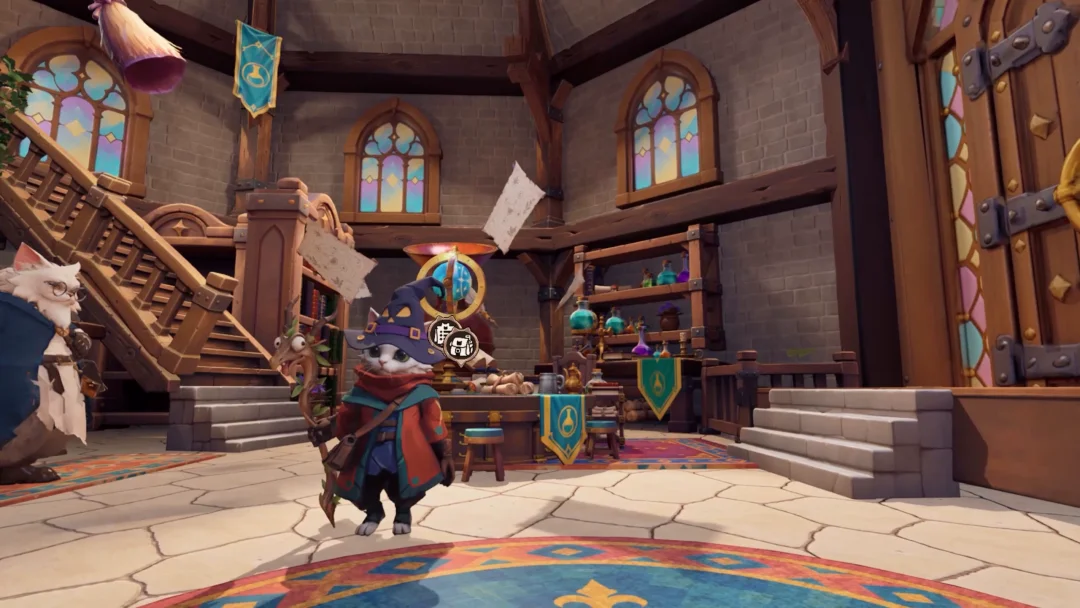
In 3D modeling and game development, @superalesha had the model build a miniature rainy Tokyo ramen stall in Blender writing Python purely through Blender MCP with zero imported external assets. The prompt specified noren curtains, paper lanterns, steaming soup bowls, vending machines, and neon-lit puddles rendered in Cycles, with the model inspecting its own renders to spot flaws and rework them. Alibaba's team showed Qwen4-Max building playable games from natural-language prompts in Unity, Unreal Engine, and Godot — setting up scenes, writing gameplay logic, integrating external assets, and tuning camera angles and combat feel from live visual feedback to produce the Unreal Engine 3D cat-wizard adventure Meow of Magic, the sword-flying fantasy adventure Yun Guan Xing, and the Unity 6 Android racing game Flying Racer.
To keep long-running agent jobs from drifting off course and only surfacing errors at the very end, Alibaba introduced Live Delivery alongside the open-source Qwen-Live-Delivery-Plugin: on complex tasks, the model ships a runnable first version early and expands it iteratively based on execution feedback and user instructions, letting developers step in and redirect at any stage.
Across manufacturing, finance, law, healthcare, and scientific research, Alibaba disclosed six partner deployments:
| Domain | Workflow | Reported numbers |
|---|---|---|
| Automotive manufacturing (SANF, Pacific Union lines) | Builds 3D production lines from 2D layout drawings and process specs for virtual PLC commissioning; designs door assemblies and friction wheels at the part level, generating toolpaths and simulating to catch overcuts and undercuts before machining | Manual programming time for a single workpiece drops from ~475 min to 24 min (down ~95%) |
| Corporate IPO legal due diligence | Cleans up batches of messily named client working papers, renaming, filing, and indexing them by substance; cross-checks corporate registry, IP, litigation, and credit records to flag reinstatement clauses hidden in valuation adjustment mechanism (VAM) agreements | Organizes 198 working papers into 14 folders and delivers an 86-page, 60,000+-Chinese-character report covering 12 review areas and 14 legal issues, with every finding cited back to working papers |
| Financial research (CSI 300 index futures) | Pulls A-share, HK/US equity, bond, fund, and derivatives data to compute theoretical futures basis and volatility spreads from financing costs, dividend yields, and maturities, outputting traceable Excel workbooks and editable PowerPoint decks | Calls 90 MCP tools; every Excel cell links back to its raw data source with strict chart-to-workbook alignment in PowerPoint |
| Critical-care clinical support | Reads dozens of lab reports, a 10,000+-character clinical course, and multiple order sets in a single session, splitting raw imaging into 6 series and dispatching subagents in parallel to review hundreds of chest CT slices | Processes 10,000+ Chinese characters of clinical notes and 1,433 images, identifying bilateral dependent consolidation (matching the attending physician's diagnosis) with 4 management recommendations aligned item-for-item with same-day orders |
| Dry-wet closed-loop lab research (Deep Principle Mira platform) | For high-power data center chip cooling, autonomously runs structural screening, MPA property prediction, first-principles calculations, and retrosynthesis analysis, then dispatches an automated wet lab to synthesize, purify, and test samples | Runs continuously for 48 hours, screens 2.7M candidate molecules, and produces an experimentally validated physical coolant sample across 4 closed-loop iterations |
| Cloud resource scheduling (Alibaba Cloud + MindOpt) | Generates candidate scheduling algorithms and iterates alongside Alibaba's in-house solver MindOpt for multi-model data annotation routing, online GPU allocation, and offline CPU rescheduling | Cuts data annotation scheduling cost by an average of 10.42%, increases full-machine idle GPU blocks by 4.62%, and speeds up offline CPU rescheduling optimal solves by over 14.61× |
All six deployments are vendor-selected showcase workflows developed with Alibaba's partners and have not been independently reproduced; the reported time savings and speedups should be read as upper-bound results on custom-integrated pipelines.
When asked to generate a static webpage from a single one-line prompt, community comparisons generally find Qwen4-Max's visual polish a step behind top frontier models. In a side-by-side Chinese zodiac page test against GPT-6 Astra and DeepSeek V4.1 Flash, the preview build produced a complete structural layout, but its lighting, shadows, and surface detail looked flat.
To get solid frontend and interactive UI code out of Qwen4-Max, spell out acceptance criteria in the prompt and plan on multi-turn follow-ups for color palettes and motion. Appending this checklist to the end of frontend prompts helps tighten the first pass:
Before delivering the frontend page, check each item:1. Visual hierarchy: keep spacing, type scale contrast, and primary/secondary colors distinct; do not output unstyled browser-default form controls.2. Interactions and states: ensure all buttons, filters, modals, and forms work; include hover feedback, loading states, and empty states.3. Weak-spot pass: review the overall page before delivery, pick the weakest visual or interactive section, and do one extra polish pass on it.4. Render check: confirm the page renders cleanly with no unclosed tags, layout overflow, or browser console errors.Combining the benchmark tables, latency numbers, and cache bill math above, here is how Qwen4-Max fits different workloads:
| Workload / scenario | Recommendation | Why & trade-offs |
|---|---|---|
| Multi-turn long-context agents / heavy document & due diligence workflows | Good fit out of the box | 1M context window; ranks first on ALE (46.7) and legal HLAB-Vals (21.3); cache hits cost $0.075/1M (CNY 0.5/1M in mainland China), cutting Work360 cost per task by 62% ($1.67). Configure explicit cache in production |
| Repository-level bug fixing & standard full-stack coding | Usable; adjust effort by task | Scores 75.7 on DeepSWE v1.1; keep the default high effort for daily edits and switch to xhigh for complex full-stack or CLI jobs (a 17-point gap on Terminal-Bench) |
| Heavy terminal command execution / black-box software replication | Prefer Claude or Kimi | Scores just 48.5 on Terminal-Bench 4.0 (vs. 67.2 for Kimi K3.1 and 59.6 for Opus 5.5) and 31.5 on ProgramBench (vs. 65.0 for Opus 5.5) |
| High Intelligence Index score at a low per-task bill | Look at GPT-6.1 Sol first | On Artificial Analysis, GPT-6.1 Sol (max) scores 55 on the Intelligence Index at $1.27 per task, vs. Qwen4-Max at 43 and $3.27 per task |
| One-shot frontend page generation | Pair with a detailed checklist | Ranks 6th on CodeArena WebDev (1,750 ±15), but single-prompt outputs look flat on lighting and detail; specify visual hierarchy and empty states up front and iterate |
| Latency-sensitive interactive use / local self-hosting | Not a fit | AA measured 147.63 s time to first answer token and 32.1 min per task; Max is a proprietary API-only model, and open-weight smaller Qwen4 models have no sizes or dates yet |
Yes. QwenCloud's Token Plan supports both OpenAI-compatible and Anthropic Messages endpoints, and its official compatibility list includes Claude Code, Cursor, Qwen Code, Codex, Qoder, and OpenClaw (The Dark Factory's test above ran inside Claude Code). When calling the Anthropic Messages endpoint, pass the reasoning effort via output_config.effort (medium maps to high, and max maps to xhigh). Note that Token Plan uses a dedicated endpoint (token-plan.maas.qwencloudapi.com) and dedicated API keys prefixed with sk-sp-, which cannot be mixed with pay-as-you-go keys.
In mainland China (Alibaba Cloud Model Studio), standard input is CNY 10 per million tokens, output is CNY 30 per million, and cache hits are CNY 0.5 per million, with a 1M-token free quota for new users (valid for 90 days). Internationally (QwenCloud, Singapore), standard input is $1.5 per million tokens, output is $4.5 per million, and cache hits are $0.075 per million (Model Studio's international deployment tier also lists a CNY 10.938 / CNY 32.813 bracket). Converted at current exchange rates, per-token pricing is nearly identical across both regions, though the subscription-based Token Plan can currently only be purchased and used in the Singapore region.
No — Qwen4-Max itself is proprietary and only available through cloud APIs and official Qwen apps. In the launch post, the Qwen team stated that smaller and medium-sized models in the Qwen4 series built on the same architecture and training pipeline will be released as open-weight models later, without announcing parameter counts or release dates yet.
CodingPass includes Claude, GPT, Gemini and Qwen3.8 Flash, metered at official API prices. No surprise charges, cancel anytime.